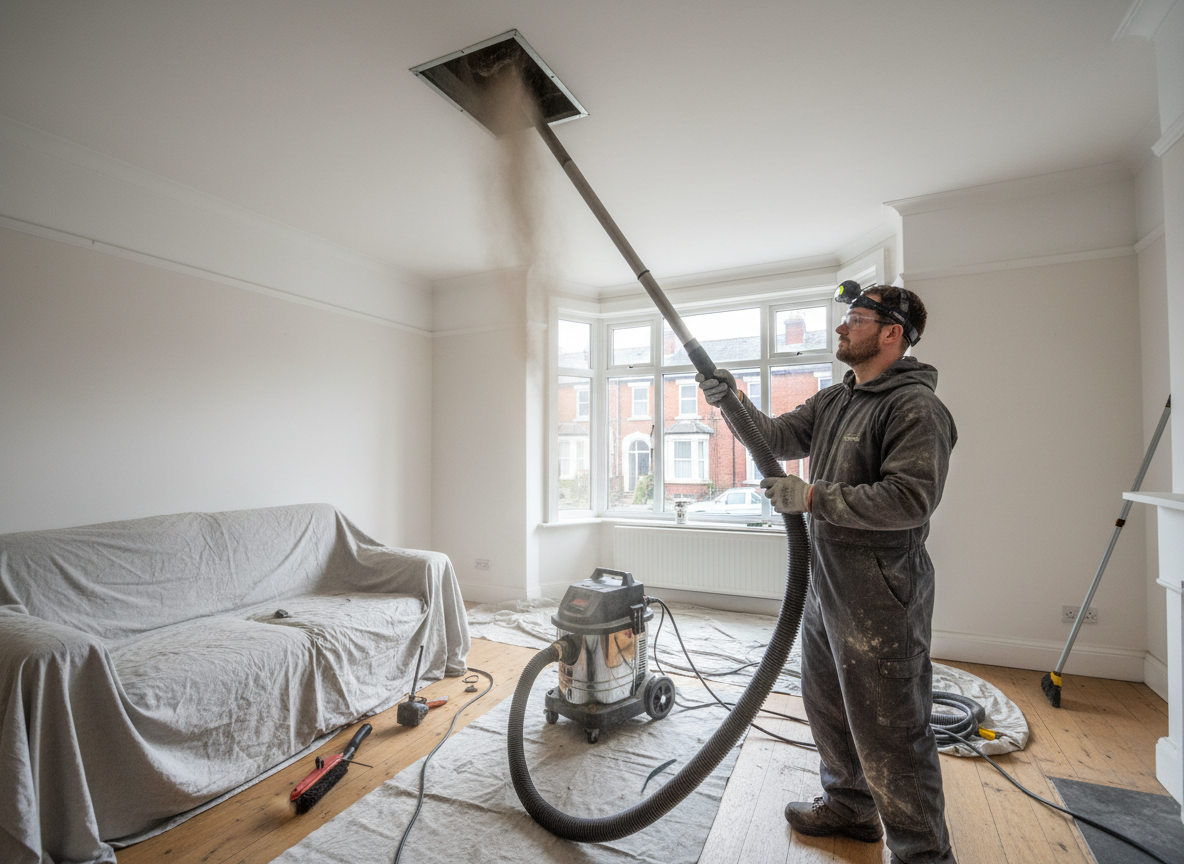
Homes in Manchester often feature older ductwork that runs through attics and crawl spaces exposed to coastal humidity. This setup allows dust, pollen, and pet dander to settle along long runs of flexible ducting that can be hard to reach without proper agitation tools. Skipping these hidden sections leaves behind residue that recirculates through the HVAC system every time the heat or AC kicks on.
Technicians start by mapping the full duct layout because many Manchester properties have additions that created dead-end branches or sharp bends. These spots trap debris and reduce airflow more than straight runs. Proper cleaning requires removing registers, sealing the system, and using negative pressure to pull loosened material out rather than pushing it deeper into the home.
After the main lines are cleared, each vent is brushed and vacuumed individually. This step matters in older Manchester homes where original metal ducts connect to newer flexible sections, creating transition points that collect lint and insulation fibers. Final inspection checks for any remaining blockages before the system is returned to normal operation.
Homeowners in the area frequently notice improved airflow within a day or two once the ducts are clean, especially during the first cold snap when furnaces run longer cycles. The process also reduces the load on the blower motor, which helps avoid premature wear in systems that have run for years without maintenance.
Technician insight
In Manchester, the thing that catches most people out with Residential Air Duct Cleaning is how many homes have had room additions that created long, narrow flex runs with multiple 90-degree turns where debris packs tight and standard brushes miss it entirely.
Pine Lake Park ranch with blocked returns
Homeowner reported weak airflow from several ceiling vents. Inspection showed the return trunk had collected years of insulation fibers at two sharp bends added during a 1990s garage conversion. After sealing and running agitation tools through the full length, extraction removed the packed material and restored normal suction at every register.
How it works
- 1
Initial Inspection
Map the full duct system, note access points, and identify any damaged sections or unusual bends common in Manchester homes.
- 2
System Sealing
Close off all vents and connect equipment to create negative pressure so debris moves toward the vacuum instead of into living spaces.
- 3
Agitation and Extraction
Use brushes and compressed air to loosen buildup along the duct walls while the vacuum removes the material from the property.
- 4
Register Cleaning
Remove, clean, and reinstall each vent cover to clear any remaining dust that could re-enter the airflow.
- 5
Final Check
Run the HVAC system briefly and confirm airflow improvement before leaving the job site.
Pricing
Cost depends on the number of runs, total linear footage, and whether any sections require extra access work; upfront quotes provided after inspection.