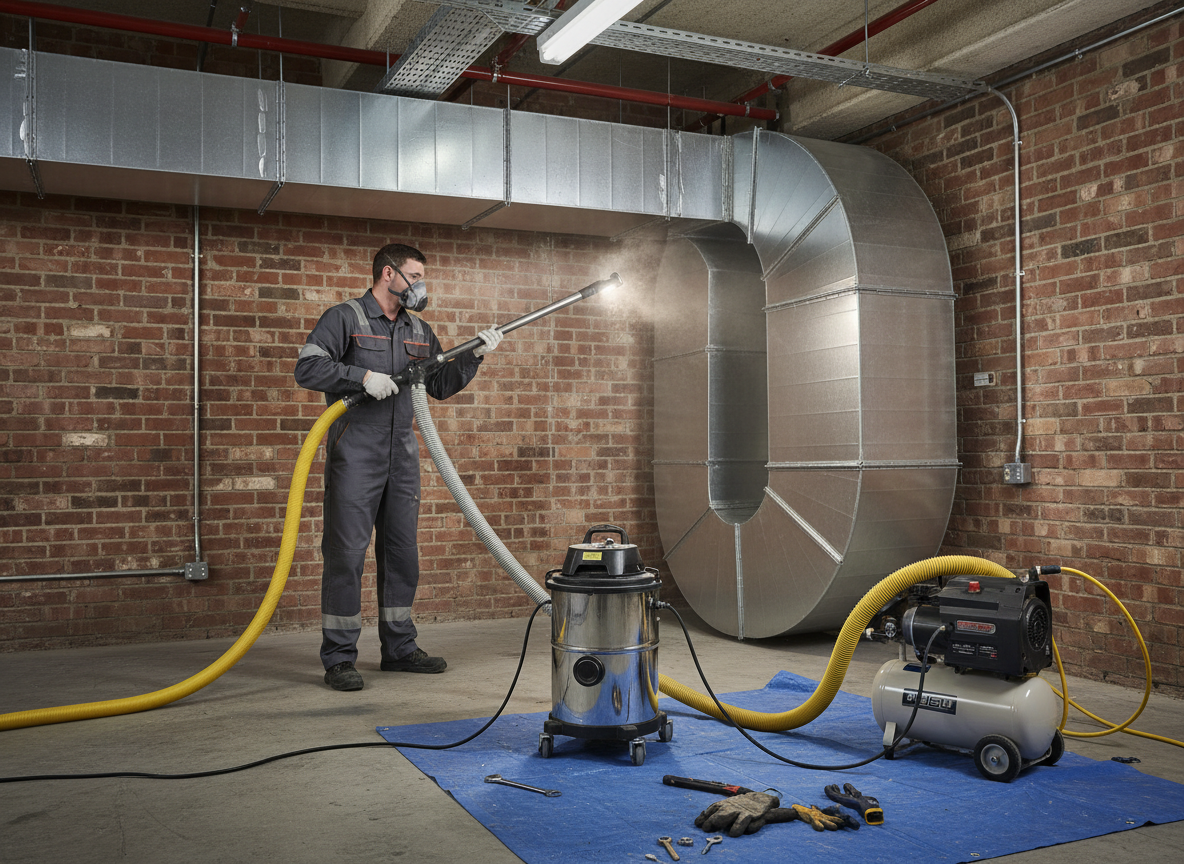
Manchester NH homes often feature older ductwork from mid-century builds in neighborhoods around the Merrimack River. Winter heating runs push dust and pet dander through seams and joints that were never sealed to modern standards. A full cleaning reaches the main trunk lines and branch runs without disconnecting the system, using negative pressure to pull debris out rather than pushing it into living spaces.
Heavy snow and freeze-thaw cycles in the Manchester area force furnaces to run longer, packing lint and insulation fibers into the return side. Technicians check for disconnected flex ducts common in attics here and clear them before they collapse under their own weight. Skipping the returns leaves the biggest source of recirculated particles untouched.
Access panels must be cut and resealed properly to avoid voiding manufacturer warranties on newer high-efficiency units installed in updated Manchester properties. Homeowners sometimes attempt DIY brushes that snag on dampers and create new leaks. Professional equipment includes cameras to confirm every section is cleared before the job ends.
Seasonal Considerations
Cold snaps increase runtime and move more debris into the blower compartment. Spring cleanings catch the winter accumulation before cooling season begins.
Technician insight
In Manchester, the thing that catches most people out with HVAC duct cleaning is the amount of insulation fibers that pack into returns after decades of attic work in older neighborhoods near the river. Homeowners forget those returns pull air from the coldest, dustiest spaces and never get them opened during a standard job.
Blocked Returns in North End Home
Furnace was short-cycling in a 1960s Manchester split-level. Inspection showed returns packed with blown-in insulation from an attic project years earlier. Crew opened the main return trunk, cleared the fibers, and restored full airflow without replacing any duct sections.
How it works
- 1
System Inspection
Technician maps all accessible trunk and branch lines, notes any disconnected sections common in Manchester homes, and checks blower condition.
- 2
Access Preparation
Remove registers and create entry points at the main trunk while protecting floors and furnishings from dislodged material.
- 3
Negative Pressure Cleaning
Attach vacuum collection system and agitate debris from supply and return runs using brushes sized for residential duct diameters.
- 4
Final Verification
Camera inspection confirms clearance, reseal all access points, and restore airflow before leaving the property.
Pricing
Upfront quotes based on system size, number of runs, and access difficulty; no hidden fees.