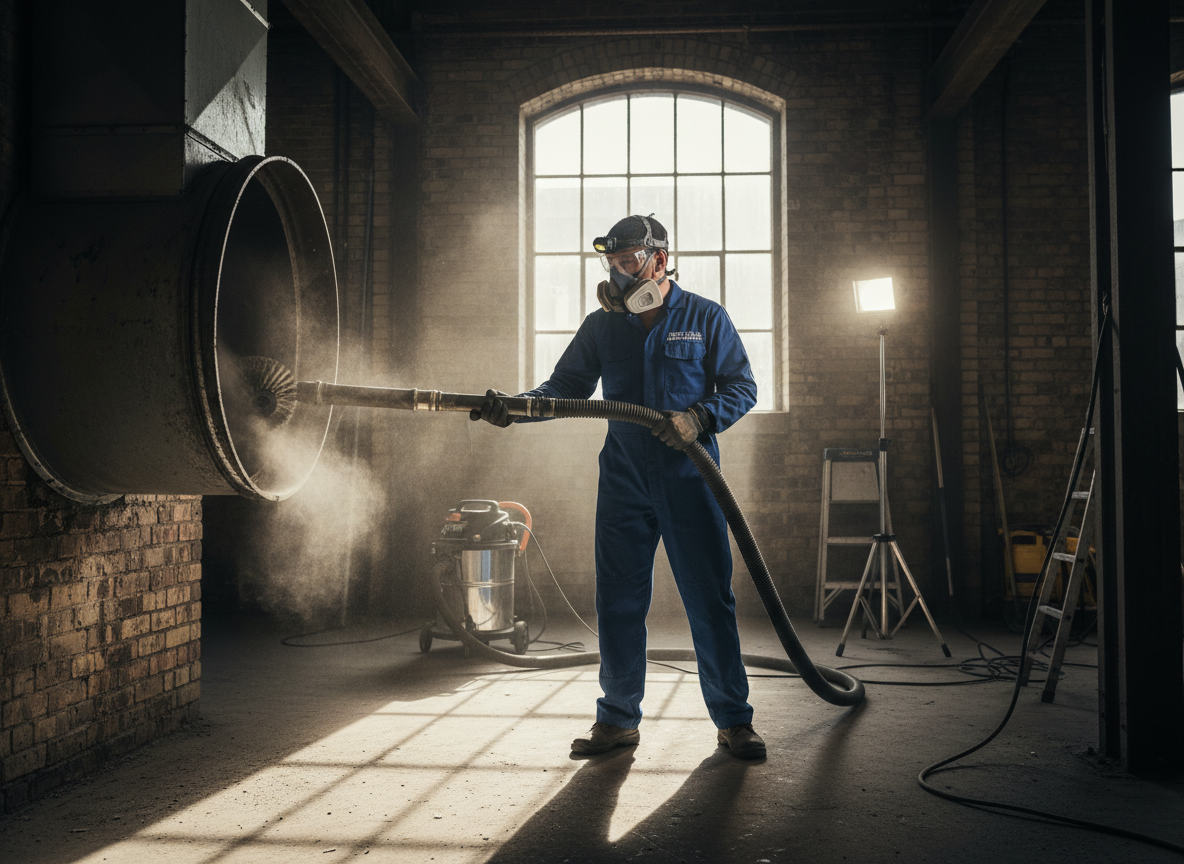
Manchester homes built before the 1980s often have rigid metal ductwork with multiple 90-degree turns that trap fine dust and insulation fibers. Winter heating cycles push warm air through these runs, baking residue onto the interior walls and reducing airflow. A full cleaning requires access panels at each trunk line plus negative-air machines to pull debris out without redistributing it into living spaces.
Summer humidity in the Manchester area can cause condensation inside supply ducts that run through unconditioned attics. This moisture mixes with dust to form a sticky layer that standard brushes miss. Technicians must use rotary whips sized for the duct diameter and follow each branch to the register to prevent mold regrowth once temperatures drop again.
Tight crawl spaces under many Manchester neighborhoods limit equipment size and force shorter vacuum hoses. Crews stage the main unit on the first floor and run lines through foundation vents, checking for loose asbestos tape on older joints before starting. Skipping this inspection risks fiber release into the home during negative-pressure cleaning.
Seasonal Duct Challenges in Manchester
Homeowners notice heavier dust on furniture each spring after the furnace has run nonstop through winter. Cleaning before the first cold snap prevents that season's debris from circulating again.
Technician insight
In Manchester, the thing that catches most people out with professional duct cleaning is the number of 90-degree elbows in pre-1970 homes along Bridge Street. Those tight turns collect years of lint that a standard shop-vac hose never reaches, so you have to open access panels at every trunk or the job stays half done.
Blocked Return in North Manchester Cape
Homeowner reported weak airflow on the second floor after two cold winters. Inspection showed the main return trunk under the attic floor packed with insulation fibers and dust. Crew opened two access points, ran whips the full length, and restored full airflow without disturbing the finished ceiling.
How it works
- 1
Initial Walkthrough
Technician inspects every accessible trunk and branch line, noting register locations and any damaged insulation.
- 2
System Isolation
Registers are sealed and the furnace is disconnected to create a closed negative-pressure zone.
- 3
Mechanical Agitation
Rotary brushes and whips dislodge debris from duct walls while the vacuum pulls material to the collection unit.
- 4
Final Inspection
Each line is checked with a camera; any remaining residue is re-cleaned before registers are reopened.
Pricing
Cost varies with number of stories, duct accessibility, and whether returns run through attics or crawl spaces.