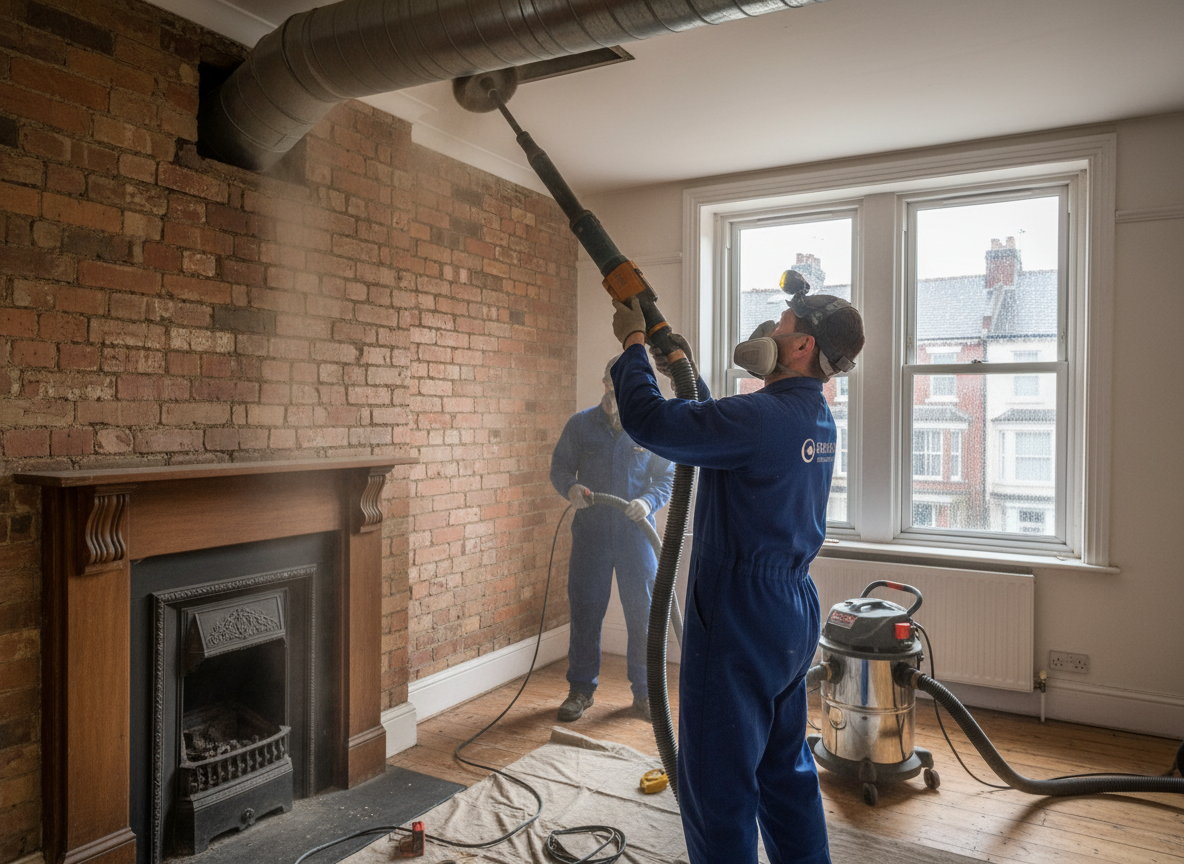
Manchester sits in Ocean County with many single-family homes built from the 1970s onward. These properties often feature extended runs of flexible ductwork that trap dust, pollen, and pet dander over decades. Homeowners notice reduced airflow from the HVAC system during summer humidity spikes and winter heating cycles when the furnace runs longer. Cleaning restores proper airflow without disturbing insulation or damaging older metal ducts common in the area.
Coastal moisture in the Manchester region encourages mold growth inside ducts when condensation forms on cool surfaces. Technicians use negative-air machines and rotating brushes sized for both rigid and flex lines to avoid punctures. Access panels are cut only where needed and sealed afterward to meet local building practices. Skipping this step in older homes frequently leads to repeated service calls within a single season.
Residents near the Manchester border with Toms River and Lakehurst report similar issues after nearby construction stirs fine soil into the air. Proper cleaning includes the main trunk lines, branch runs, and return grilles rather than surface vacuuming alone. This approach prevents redistributed particles from settling back into living spaces once the system restarts.
Technician insight
In Manchester the thing that catches most people out with local air duct cleaning is the amount of flexible ductwork run through unconditioned attics; once summer humidity gets in there the liner starts to hold moisture and dust cakes on fast, so a standard vacuum pass misses it and the system loads back up within months.
Hidden Flex Duct in North Manchester Home
Homeowner noticed weak airflow from ceiling registers after two seasons of heavy AC use. Inspection found collapsed flex lines in the attic packed with dust and insulation fibers. Lines were replaced where crushed, remaining ducts were agitated and extracted, and airflow returned to normal without further restriction.
How it works
- 1
Initial Walk-Through
Technician inspects every accessible duct section, notes material type, and identifies access points without guessing at hidden runs.
- 2
System Isolation
Registers are sealed and the HVAC is isolated so debris moves only toward the vacuum collection point.
- 3
Agitation and Extraction
Rotating brushes and compressed air dislodge buildup while negative pressure removes it from the home.
- 4
Final Inspection
Ducts are checked with a camera, panels are resealed, and the system is returned to normal operation.
Pricing
Upfront quote based on duct length, access difficulty, and whether flexible lines need extra care.