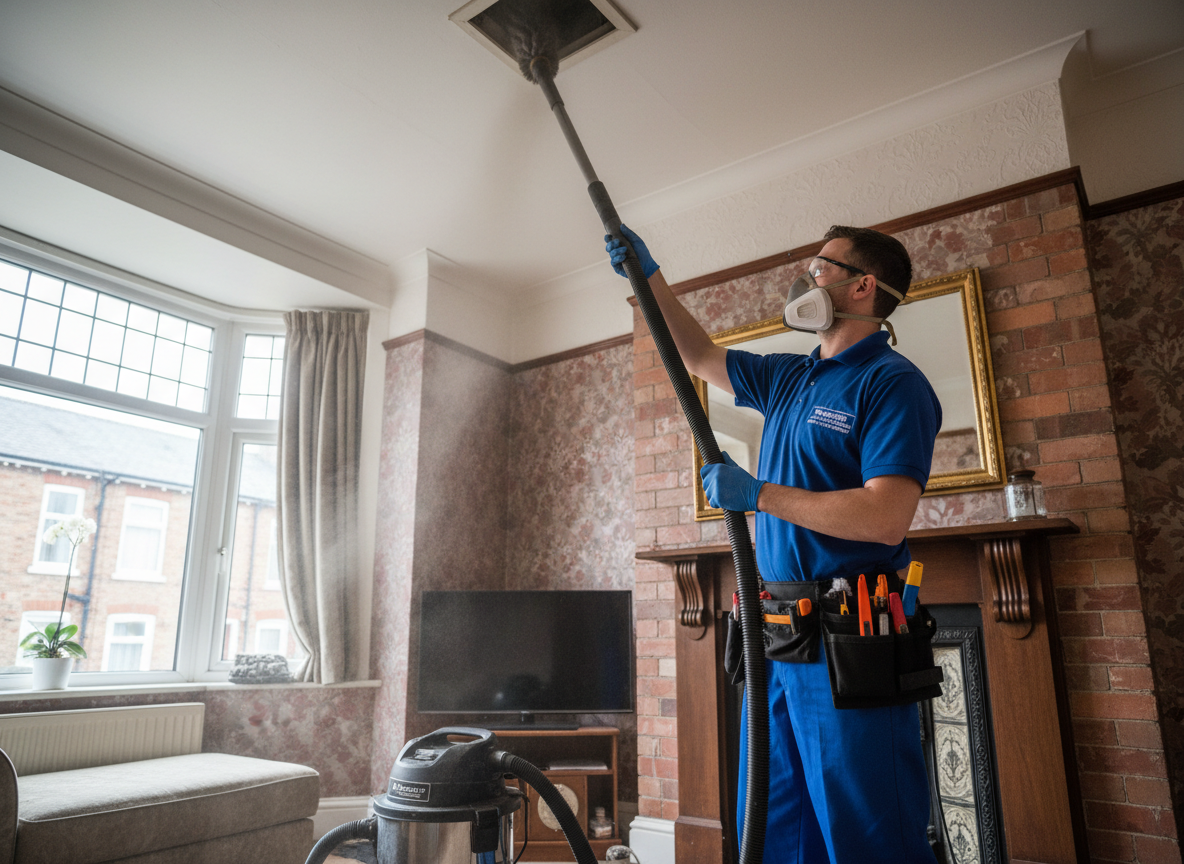
Manchester NH homes often date back to the mid-20th century with narrow metal ducts that trap dust and insulation fibers from decades of oil or gas furnace use. Winter temperature swings force systems to run longer, packing debris into elbows and returns that standard vacuums miss. Home Revix crews use negative-air machines sized for these tight runs to pull material without collapsing sections common in North End and Amoskeag neighborhoods.
Soil and moisture conditions along the Merrimack River corridor add another layer. Spring humidity carries pollen and fine silt into open returns, while fall leaf debris gets pulled in through attic vents. Cleaning must account for these seasonal loads or particles re-circulate within days. Technicians inspect for disconnected joints that let conditioned air leak into crawl spaces, a frequent issue in West Side capes and ranches.
Proper cleaning here means removing the blower wheel and cleaning the furnace cabinet too, not just the ducts. Skipping this step leaves the main source of re-contamination untouched. Crews also check for asbestos tape on older joints before disturbing anything, a precaution required in many Manchester properties built before 1980.
Technician insight
In Manchester, the thing that catches most people out with air duct cleaning is the 1950s-70s homes on the West Side where original ductwork was never sized for today's high-efficiency furnaces, so the restricted airflow makes debris pack tighter and requires smaller whips to clear without denting the thin metal.
North End Cape with Poor Airflow
Homeowner reported weak heat on the second floor. Inspection showed compacted dust and insulation in the original rectangular ducts. Crews used reduced-diameter tools to clear the lines without collapse, restored full airflow, and removed the material that had been recirculating each heating cycle.
How it works
- 1
Initial Walk-Through
Technician inspects every accessible register, return, and the furnace cabinet to map duct layout and note access points.
- 2
System Isolation
Registers are sealed and the furnace is isolated so negative pressure pulls debris only through the intended path.
- 3
Agitation and Extraction
Rotating brushes and compressed air dislodge material while the vacuum collects it outside the home.
- 4
Final Inspection
Each section is checked with a camera, the blower is cleaned, and registers are reinstalled before the system is restarted.
Pricing
Cost depends on number of runs, furnace accessibility, and whether the home has multiple stories or finished basements; upfront quotes given after inspection.