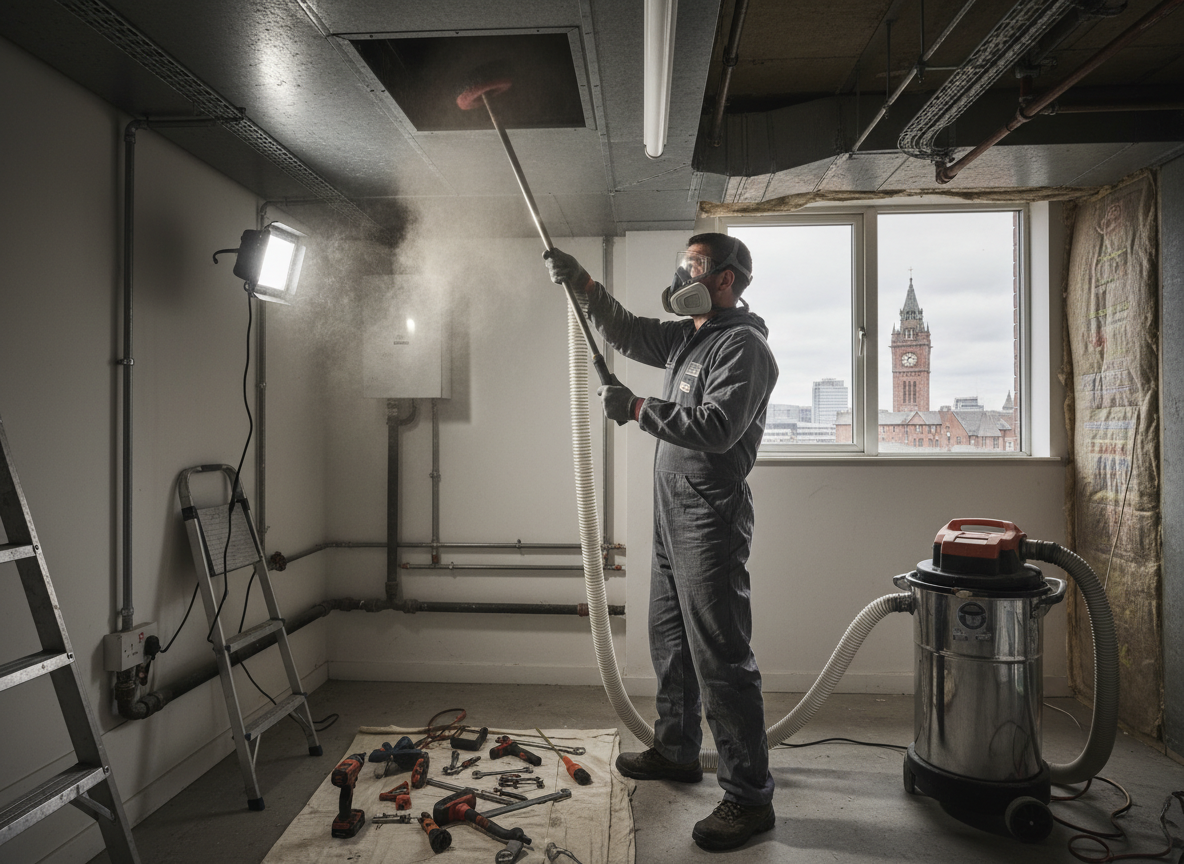
Manchester Township homes often feature ranch-style and split-level construction from the 1960s onward with long horizontal duct runs that trap pollen and fine sand from the surrounding pine barrens. These runs frequently sit above crawl spaces where moisture from seasonal humidity allows mold to form on interior surfaces. Proper cleaning requires reaching every branch line rather than just the main trunk to restore airflow without disturbing insulation or wiring.
Coastal winds common in Ocean County push outside particles through unsealed joints in older ductwork, especially around the return grilles in utility rooms. Technicians must inspect for gaps at each boot connection because loose tape or failed mastic lets debris re-enter after cleaning. Using negative-air machines with HEPA filtration prevents redistribution of dust into living spaces during the process.
Access panels are sometimes needed in finished ceilings or walls when original construction omitted cleanouts. Homeowners should expect minor drywall work if lines run through finished areas, followed by matching texture and paint. Skipping these steps leaves hidden sections untouched and defeats the purpose of the service.
Scheduling around Manchester's variable spring and fall pollen peaks helps reduce immediate re-soiling. Crews also check for rodent or insect evidence inside ducts, which appears more often in homes bordering wooded lots along Route 70 and Route 37 corridors.
Technician insight
In Manchester, the thing that catches most people out with Duct cleaning services near me is how many 1970s ranch homes along the Pine Lake Park section have supply lines buried under insulation in low attics where sand from nearby Route 37 construction keeps sifting in year after year.
Hidden Buildup in a Manchester Ranch
A homeowner near the Manchester border noticed uneven airflow from several registers. Inspection showed heavy sand and pollen accumulation in the long horizontal runs typical of 1960s construction. We set up containment at the air handler and cleaned every branch line. Airflow returned evenly and the homeowner reported clearer indoor air within a day.
How it works
- 1
Initial Walkthrough
Technician inspects every accessible register, return, and the furnace or air handler to map the full duct layout and note access limitations.
- 2
Negative-Air Setup
Equipment is connected at the main trunk to create containment while brushes and compressed air agitate debris from branch lines.
- 3
Source Removal
Rotating brushes and air whips dislodge buildup; all material is drawn into sealed collection units without release into the home.
- 4
Post-Cleaning Verification
Registers are reinstalled, airflow is checked at each vent, and the homeowner receives a written summary of findings and work completed.
Pricing
Cost depends on number of runs, access difficulty, and whether the system has been neglected; 24/7 scheduling available with upfront quotes after inspection.