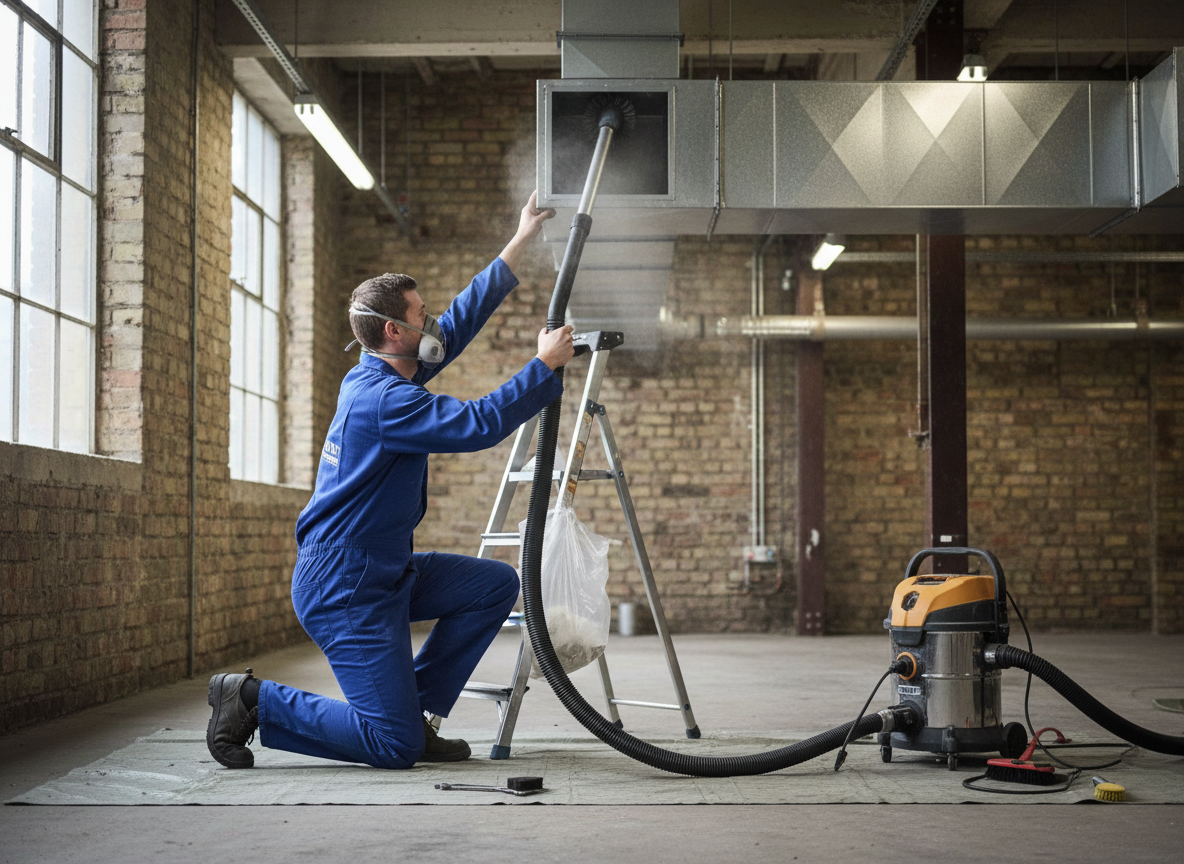
Manchester Township homes often feature duct systems installed decades ago in split-level and ranch-style houses common throughout Ocean County. These older runs collect fine sand from nearby coastal winds along with household dust, reducing airflow and stressing HVAC equipment during humid summers. Cleaning focuses on reaching branch lines behind finished walls without unnecessary demolition.
High pollen counts in spring and fall combine with the area's sandy soil to create sticky buildup inside return vents. Technicians use negative-air machines to contain debris while brushing flexible lines that run through crawl spaces common in Manchester neighborhoods. Skipping these hidden sections leaves most of the contamination untouched.
Residents near Route 70 and the Pine Barrens notice faster dust reaccumulation because of constant traffic and wind-blown particles. Proper cleaning includes sealing access points after service to limit new infiltration, a step that matters more here than in tighter suburban builds farther north.
Technician insight
In Manchester, the thing that catches most people out with air vent cleaning is how the sandy soil and coastal winds pack fine grit into the return lines of 1970s and 1980s homes near the Parkway. Homeowners often think a surface vacuum is enough, but those particles sit deep in the flex duct that runs under the floor, and missing it means the system loads right back up the first time the heat kicks on.
Hidden buildup in a Manchester ranch
A Manchester Township homeowner noticed weak airflow from floor registers. Inspection found decades of sandy grit packed inside the original flex lines running through the crawl space. Negative-air brushing removed the load and restored even pressure across all rooms without opening finished walls.
How it works
- 1
Inspection
Technician examines all accessible vents and main trunk lines to map the system layout specific to the home's construction era.
- 2
Setup
Negative-air equipment connects to the main trunk while registers are sealed to isolate each branch during cleaning.
- 3
Agitation and Extraction
Rotating brushes and compressed air dislodge debris; the vacuum pulls material out without spreading it through living spaces.
- 4
Final Check
Vents are reopened and airflow is tested to confirm improved circulation before equipment is removed.
Pricing
Cost depends on number of vents, home size, and whether lines run through finished ceilings or crawl spaces. Upfront quotes provided after inspection.