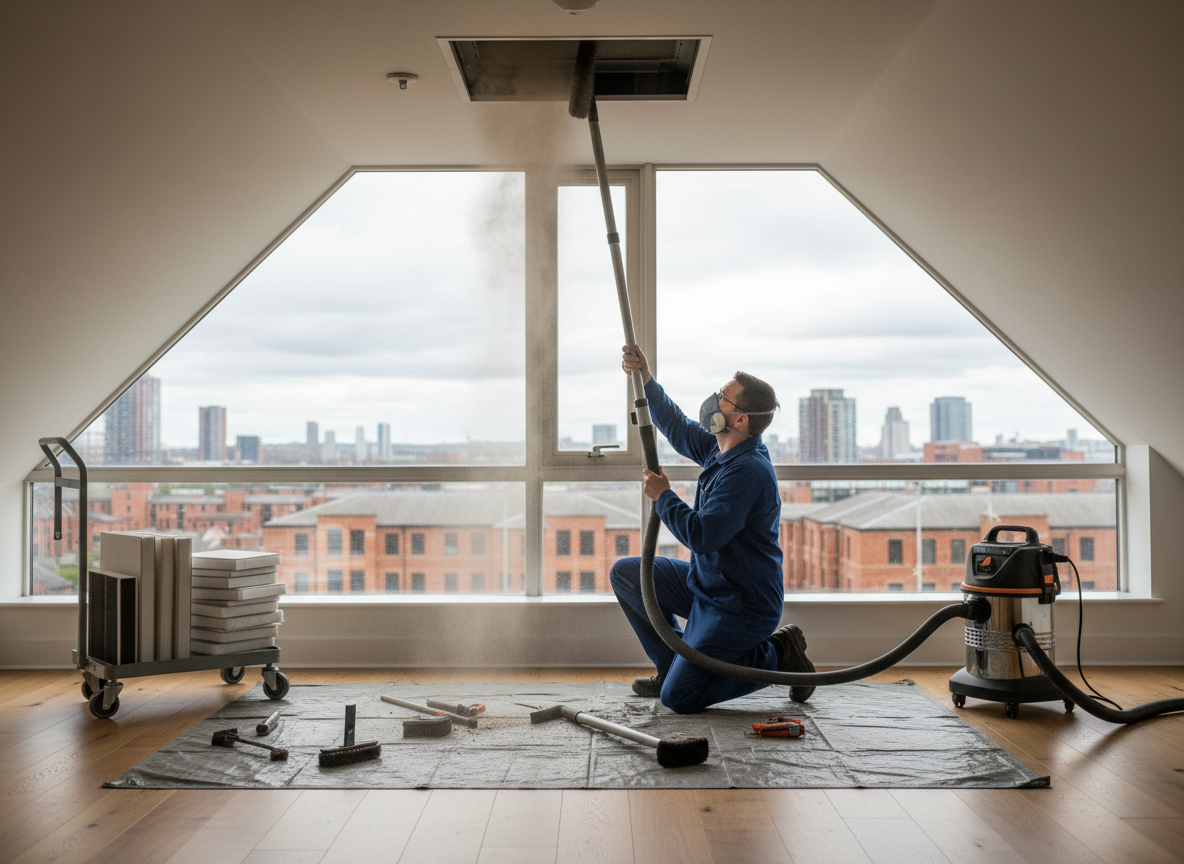
Manchester homes built before 1980 often have rigid metal trunk lines and flex runs that trap pollen, pet dander and mold spores for decades. During the long heating season windows stay closed and the furnace recirculates the same air, pushing allergens through every room. A proper cleaning reaches the main trunk, each branch and the return side, then uses negative-air machines so loosened material does not re-enter living spaces.
Allergy-focused work starts with a camera inspection to locate damp sections near the condensate pan or poorly sealed joints that grow mildew. Technicians then agitate and extract debris without damaging the thin insulation found in many Manchester attics. After extraction, an EPA-registered sanitizer is applied only where moisture evidence exists, avoiding unnecessary chemical use in dry systems.
Homeowners frequently notice reduced sneezing and clearer morning breathing within a day or two once the ducts are clear. The same job also improves furnace efficiency because airflow is no longer restricted by years of accumulated lint and dust.
Technician insight
In Manchester the thing that catches most people out with air duct cleaning for allergies is the amount of fine construction dust still sitting in ducts of 1950s–1970s capes on the West Side; those homes were never vacuumed during original construction and our cold winters keep the furnace running nine months a year, constantly stirring the same material.
West Side Cape with Year-Round Allergies
Homeowner reported constant sneezing despite new filters. Inspection showed thick gray dust and mouse droppings in the main trunk feeding the first floor. Crew isolated the system, extracted the debris, and replaced two collapsed flex runs. Follow-up call two weeks later confirmed noticeably less morning congestion.
How it works
- 1
Initial Camera Inspection
Technician runs a scope through the main trunk and accessible branches to identify heavy debris, moisture or disconnected sections common in Manchester’s older housing stock.
- 2
System Isolation and Containment
Registers are sealed and a negative-air machine is attached to the return to prevent particles from escaping into living areas during agitation.
- 3
Mechanical Agitation and Extraction
Rotating brushes and compressed-air whips loosen material from duct walls while the vacuum removes it; flex lines are cleaned or replaced if collapsed.
- 4
Final Verification and Reassembly
Second camera pass confirms debris removal, registers are reopened, and the system is returned to normal operation.
Pricing
Cost depends on number of runs, access difficulty in attics or crawl spaces, and whether flex duct replacement is needed.