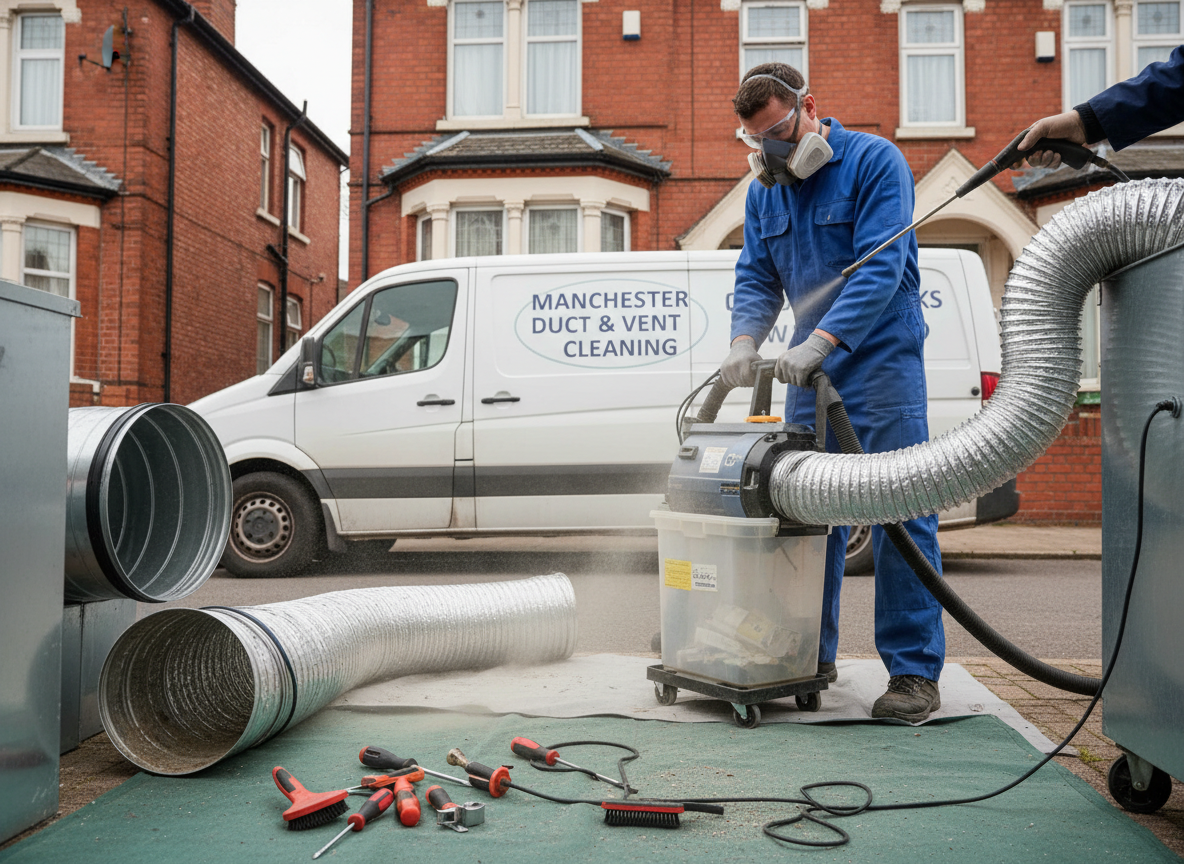
Manchester's housing stock includes many pre-1960 homes with original ductwork that accumulates heavy lint and heating residue from decades of oil or gas furnace use. Winters here drive constant heating cycles that push fine particles through the system and into living spaces. Technicians must account for narrow access points in basements and crawl spaces common along the Merrimack River neighborhoods, where moisture can combine with dust to create stubborn blockages that standard brushes miss.
Dryer vent runs in these homes often travel long distances through exterior walls or up through attics, picking up lint that restricts airflow and raises fire risk. Cold weather exacerbates the issue because residents run dryers more frequently while windows stay sealed. Proper cleaning requires removing the full vent line, clearing each section, and verifying airflow with a camera before reassembly to prevent future clogs from the mix of dryer lint and furnace byproducts typical in Hillsborough County homes.
Homeowners in areas like North Manchester or near Amoskeag Falls frequently overlook how tree pollen and road salt tracked indoors during winter add to duct contamination. A full service includes sealing registers during cleaning to contain debris and using HEPA filtration to protect finished floors in older hardwood homes. Skipping these steps leaves residue that recirculates after the first heating cycle.
Technician insight
In Manchester, the thing that catches most people out with air duct and dryer vent cleaning is how older oil-heated homes on the West Side trap a mix of soot and lint that standard tools cannot reach without full vent disassembly during the long heating season.
Restricted dryer vent in a 1950s Manchester home
Homeowner noticed longer drying times and musty air from vents. Inspection revealed a 12-foot vent run packed with lint and furnace residue from years of winter use. Crew disassembled the line, extracted the blockage, and restored full airflow.
How it works
- 1
Initial Inspection
Technician examines duct layout and dryer vent path using a camera to identify blockages specific to Manchester's older construction.
- 2
System Isolation
Registers are sealed and negative pressure is applied to contain debris while protecting carpets and furniture common in local homes.
- 3
Mechanical Cleaning
Rotating brushes and vacuum extraction remove lint, dust, and heating residue from every accessible section of duct and vent line.
- 4
Final Verification
Post-clean camera inspection confirms clear passages and restored airflow before equipment is removed.
Pricing
Upfront quotes based on home size, number of vents, and access difficulty in Manchester homes.